

Almost everyone knows that junk food is bad for health. Despite that, people keep on buying it. This is the reason why fast food brands are still flourishing. However, it isn’t just our health that these foods are damaging. Apart from that, they also prove a huge threat to the environment. Cooking and transportation of these foods require a huge amount of energy. Furthermore, a large part of them ends up in the dustbin. Don’t believe us? Check out these 5 ways eating junk food threatens the environment.
5 Ways eating junk food threatens the environment
Americans are hooked to fast food and junk food and the craze for eating junk food and fast food is widespread among people of all ages. These processed foods have fat and sugar, and they have enormous negative effects on our health. We have developed a habit of consuming fast and junk foods while performing routine tasks despite knowing that they are not good for our health. The consumption of junk foods is not only bad for our health, but they also affect our environment. Following are the harmful effects of junk food on the environment.
1. Fuel consumption
 In the US around 19 percent of total energy consumed in the country is used for producing food and supplying them to different places. Currently, most of this energy comes from nonrenewable sources of energy. This makes it much more important for us to look for the ways we can use to reduce fuel consumption. Research shows that we can redue this energy consumption by around 50 percent by the adoption of traditional farming and following a healthier diet pattern. The energy one needs to produce junk and processed foods is much more than what one needs to produce staple foods. If the Americans reduce their junk food consumption then it would affect the fuel consumption in a major way. Furthermore, this would also help in improving their health condition.
2. Packaging waste
In the US, packaging symbolizes waste with around one-third of municipal waste in the United States is contributed by packaging. There is no denying the fact that the use of modern packaging methods has played an important role in making our life easier because they make the process of food preparation and storage easy. Proper packaging increases the shelf life of food products. It is, however, unfortunate that packaging also harms the environment. Every year around 3.2 million tones of waste are added due to packaging. Junk foods are usually served in packets and the materials used for packing junk foods are contributing considerable amount of waste. Paper and plastic are used as packing material and the US government is yet to take any major step to recycle these waste materials.
3. Fast food waste

We have often seen that foods go unused in many restaurants. Furthermore, they are not very active in donating this food to people. A survey found in 1995 that many restaurants prefer not to donate food due to liability issue. Most of them were afraid ofwhat will happen if people fall sick after eating the food donated by them. In the last couple of years, the restaurant owners have been benefited by the expansion of curbside pickup programs. They pick unused foods from restaurants and then use them to manufacture profitable compost. According to a report published by the North Carolina Division of Pollution Prevention and Environmental Assistance, only 6.7 percent of the solid waste used for producing compost consists of unused food.
4. Greenhouse gases
Some studies have confirmed that chips and candy are more harmful to the environment than slice of bread or apples. We know that the reduction of red meat consumption would reduce our carbon footprint, but recent studies have shown that reduction of the intake of junk food will also serve same purpose. A study done by Swedish researchers found that some candies are as much harmful for the environment as pork meat. A study published in February found that around 2.2 kilos of greenhouse gas is produced during the production of one kilogram of chips.
5. Emission of VOCs
 According to research, the amount of volatile organic compounds (VOC) that generate when a fast food joint cooks four normal sized hamburgers is equal to the amount that a current model car generates after driving 1000 miles. In New Jersey, 2226 tons of particulates released by 16,000 restaurants are more than the amount of particulates released by all the diesel-powered vehicles in the state.
How to switch to eco-friendly foods
One great way of doing good both to your health and to the environment is by switching to eco-friendly foods. These foods aren’t just good for the environment. Moreover, they also prevent harmful chemicals from going down in our body system. However, one must keep in mind a few pointers when buying eco-friendly foods. There are many spurious claims from brands about the eco-friendliness of their food products.
How to read the label on an eco-friendly food item
 Before shelling out your hard earned cash on eco-friendly foods, you need to carefully read the labels on their covers. Authentic eco-friendly food is one, which has been certified by the U.S Department of Agriculture also known as USDA. According to them, foods grown or processed without using any kind of pesticides, insecticides, bioengineering methods or ionizing radiation methods are termed as eco-friendly.
Also, check the food pack for a ‘100% organic label. This means that the food item contains only organic ingredients. But, if the label reads just plain ‘organic’, the percentage of organic contents is not clear and therefore the food should be avoided.
Do sustainable and organic mean the same thing?
Sustainable foods and organic foods are slightly different from each other. They don’t always mean the same thing. If the label reads sustainable it means that the animals required for the food were raised with kindness.
Organic, on the other hand, refers to the method of growing and processing a specific food item without the use of harmful chemical fertilizers or pesticides. Sustainable foods can always be organic, but the other way round may not always be true.
What do bird-friendly or cage-free mean?
 If the food item reads ‘bird friendly’, it means that the food item has been grown and produced underneath a canopy of trees, which acts as a sanctuary for birds.
Whereas, if the food item reads “cage-free”, it means that the animals and birds from which the foods have been obtained were not literally confined in cages, but kept in open barns and warehouses.
What do grass fed or open pasture mean?
If the food item reads ‘grass fed’, it implies that animals might or might not mean that animals were raised in pastures.
If the label reads ‘open pasture’, this means that the animals didn’t have to go through cruelty. They could roam free, graze and feed in the open pastures.
What does marine stewardship council mean?

If your seafood or fish package have this label, it means they have been procured without harming the local ecosystem. It also means that the fish or the seafood you have bought was procured without endangering other sea creatures.
Environmentally friendly food options that can make a difference
True, we cannot help damaging the environment no matter what we eat, but by including environmentally friendly food in our diet, we can certainly make a difference. Here is a list of seven such foods that can reduce your carbon footprint.
1. Tomatoes
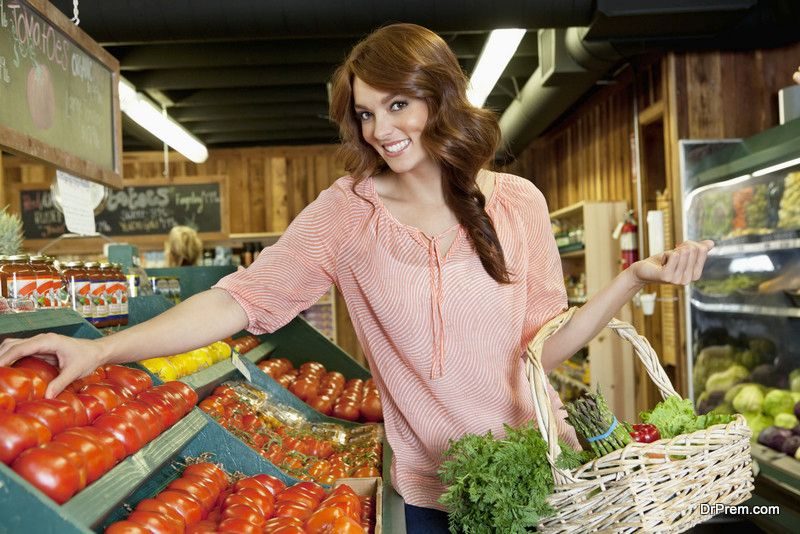 Tomatoes have a very low carbon footprint. You should prefer local grown fresh tomatoes that are available only during the season in which they are grown. You can easily tell the difference. The locally grown tomatoes have a sweet and rich taste. The ones that are not locally grown are picked before they are ripe and thus they taste more like water. You can use ripe locally grown tomatoes for making thick and delicious tomato sauce. It’d taste definitely better than the artificial processed ones you’d find in the market.
Due to their deep root systems, tomatoes tend to absorb moisture directly from the soil. So, despite being rich in water, tomatoes don’t need as much water to grow, which also makes them an ideal crop for summer. Wonderful, isn’t it?
2. Lentils
Lentils have a very low carbon footprint. They are rich sources of protein, fiber, and many other vital nutrients. They are easy to grow, easy to reap and wherever they grow they enrich the soil. In addition, Lentils are extremely inexpensive too. What else do you want?
3. Broccoli
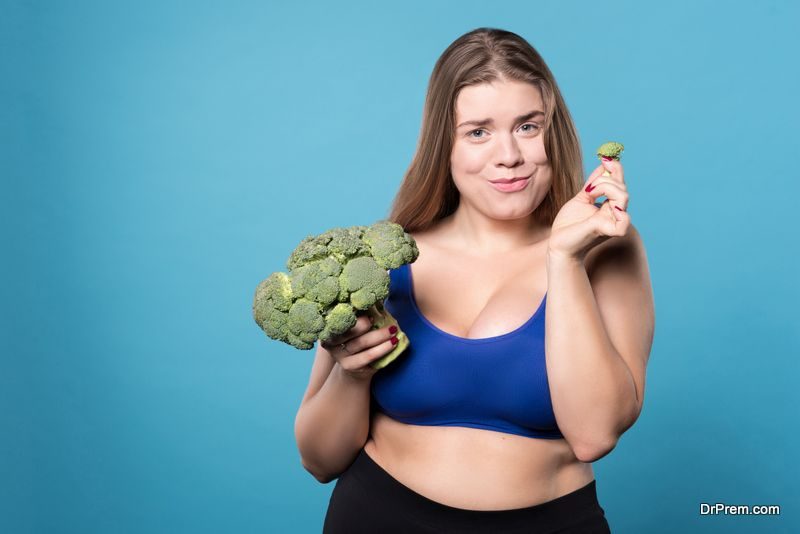 Do you want to make sure that the food you eat is free from pesticides? You can place your bet on Broccoli. It is very tough and sturdy. Pests don’t even come near it. In fact, the leaves of Broccoli act as an insecticide.
Broccoli is rich in Vitamins K and C. Because of its strong flavor, children normally don’t like eating it. But that’s not something you should worry about. You can always look for some delicious broccoli recipes at home and bring health to your home.
4. Figs
Figs are very much like the weed in your garden, very easy to grow and tough to destroy. They have more than 700 varieties on the planet and are available all throughout the year. You can cook them or eat them raw. They have great nutritional value.
5. Beans
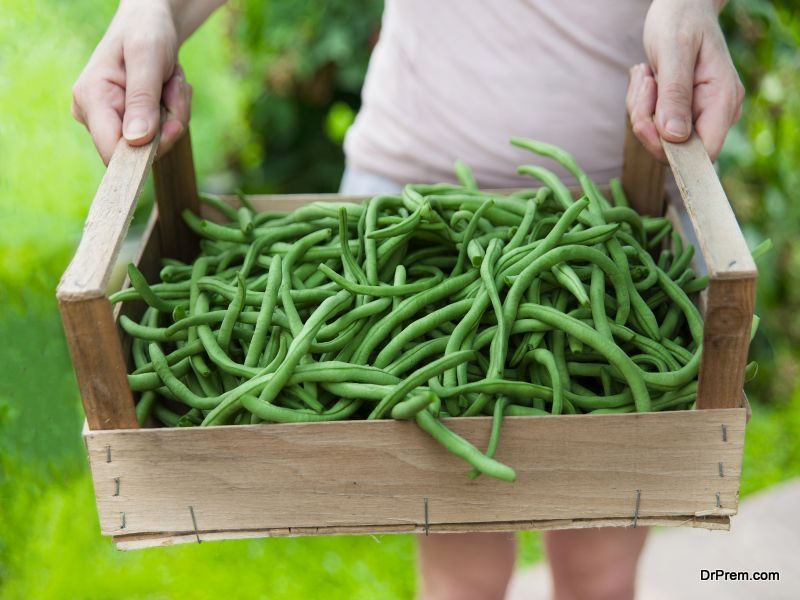 If you ask a bodybuilder about the best vegetarian sources of protein, along with Lentils, Beans are most likely to be in the top three. Beans can prove a good alternative to meat, which has a quite significant carbon footprint. It is one of the best foods for the environment. Make sure that you keep it on your weekly market list.
6. Nuts
Nuts in their raw form are not only rich in protein, but they also produce very low carbon emission. One does not eat more than one ounce of nuts in a single meal. Making them a part of your sustainable diet is never a bad option.
7. Potatoes
 Just like Broccoli, potatoes can also produce their own natural pesticides. They are highly water efficient and can last a long time without rotting.
Things to remember while buying eco-friendly food
1. Prefer Local food
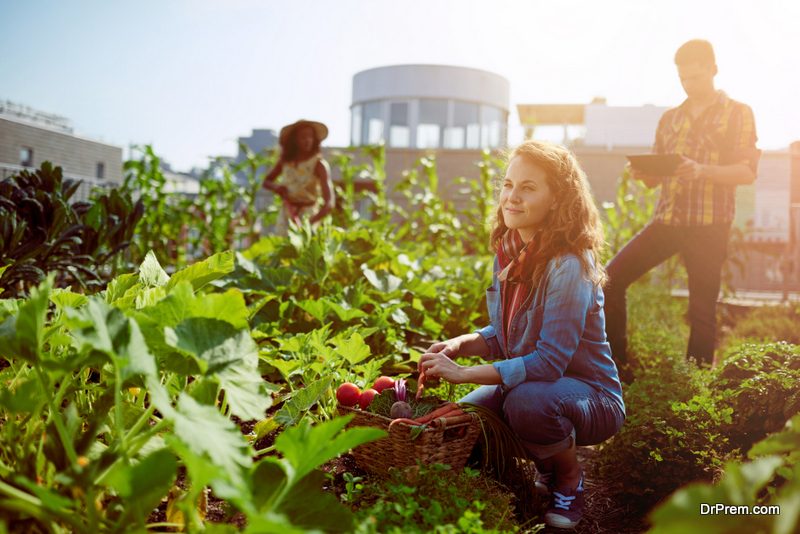 Along with being eco-friendly, locally produced food is fresher, tastier and more nutritious. Transportation adds to the carbon emission. So always say no to the expensive food items grown outside your country. The more your food travels to reach you, more is its carbon footprint.
2. Eat organic food
While buying for the food in the market, always check its label. See if it is organic or not. Organic foods are synthesized without the use of pesticides and fertilizers. Though expensive, they are healthier, safer, and much more beneficial for the environment.
3. Grow your own food
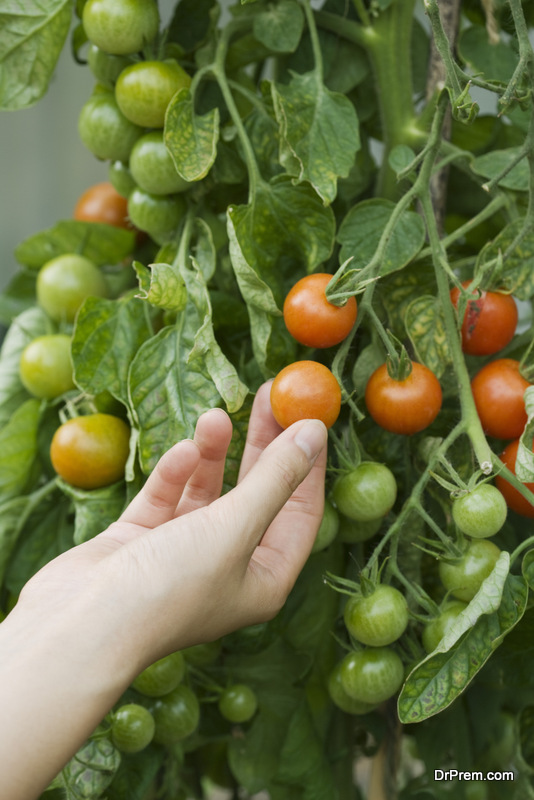 Gardening could be a great hobby, for both yourself and your children. It teaches you the true value of the food you eat. You would know how much effort and resources are required for the proper growth of your plant. Once you yourself have grown the food, you know that it is fresh, healthy, and tasty. To get the best taste, you can pluck your vegetable just before you want to cook it.
4. Eat Seasonally
If what you are eating is not seasonal, then either it is imported or it is refrigerated. In both the cases, what you are eating would be more expensive and would have a larger carbon emission. Moreover, it won’t be fresh. Rather than buying non-seasonal food, you should try more recipes with the seasonal and local food.
5. Say no to packaged food
 A significant portion of the garbage that leaves a home consists of plastic and steel containers or polythene used for wrapping. These materials do not decompose easily and cause a great environmental impact. So you should take your own reusable bag while going out to buy something.
6. Avoid processed food
It’s simple. More energy is required to produce processed food hence they have a more environmental impact. Before buying anything, check how much processing they have gone through. Always prefer whole food or less processed food.
7. Don’t waste
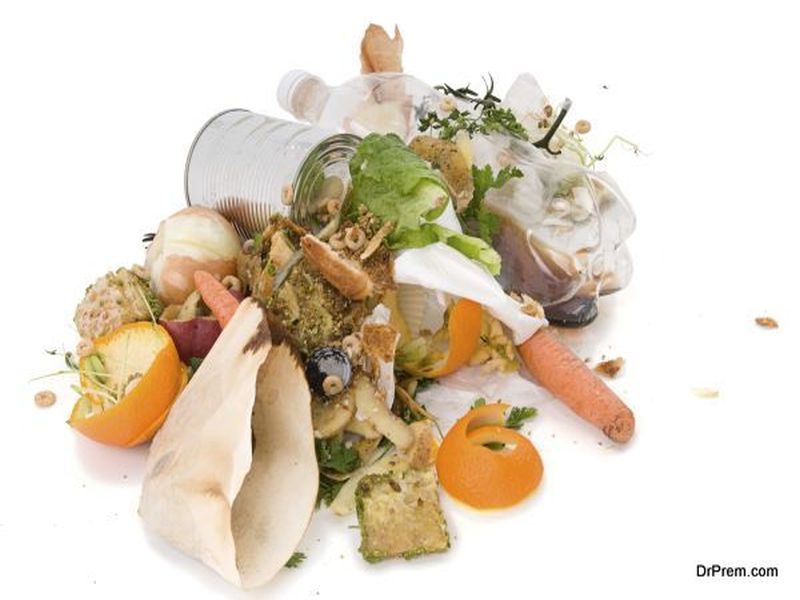 According to a survey done in 2007, from 6 billion tons of food produced globally, 1.6 billion tons or more than one-fourth of it was simply wasted. The carbon footprint of the wasted food was about 7 percent of the global carbon emissions.
Think about the environment
Food produces about 17% percent of world’s total greenhouse emissions. Sustainable diet might seem like a better option right now, but in the future, it might become a necessity. So don’t act before it’s too late. Switch to an eco-friendly diet today.